Mountain and Lake Landscape Logo Design: A Practical Guide to Choosing the Right Vector
When you are looking for a mountain and lake landscape logo design, you are often searching for more than just a pretty picture. You need a symbol that captures the essence of wild adventure, nature, and the outdoors. Whether you are launching a travel company, an environmental non-profit, or a hiking expedition business, your visual identity needs to communicate trust and exploration instantly. However, many creators make the mistake of prioritizing complexity over clarity when selecting these graphics. A great logo should be as functional as it is beautiful, serving as a versatile badge for everything from advertising flyers to vinyl wall decals.
The core appeal of this style lies in its simplicity. A minimalist line art illustration of a peak meeting a calm river or lake creates an immediate emotional connection. It evokes feelings of wanderlust and fresh air without needing heavy textures or cluttered backgrounds. When you choose a vector template, you are investing in a scalable asset that maintains its quality whether it appears on a small business card or a massive outdoor banner. But before you download that file, there are several critical details you must understand to avoid common pitfalls that can ruin your project's effectiveness.
The Hidden Pitfalls of Poor File Formats
One of the most frequent errors beginners make is assuming all image files are created equal. If you download a raster image (like a low-resolution JPG) thinking it will work for large-scale printing, you will likely end up with pixelated, blurry results that damage your brand's professional image. Conversely, trying to edit a flat PNG file when you need to change colors or resize elements can be frustrating and time-consuming.
To ensure your mountain and lake landscape logo design remains crisp at any size, you must verify the file formats included in your purchase. The gold standard for this type of graphic is the SVG vector file. Unlike standard images, vectors use mathematical paths rather than pixels, meaning they can be scaled infinitely without losing quality. This is essential if you plan to cut the design out of vinyl in bulk or print it on various merchandise like mugs and ornaments.
Always check for the following specific formats in your download package:
- SVG Vector File: Essential for web use and infinite scaling.
- EPS Vector File: The industry standard for Adobe Illustrator and professional printing.
- PNG with Transparent Background: Crucial for placing the logo over different colored backgrounds without ugly white boxes.
- JPG HD Quality: Good for quick previews but not for editing.
- PDF: Useful for sharing and basic viewing across platforms.
If a seller only provides a single JPG, reconsider the purchase. Without the EPS or SVG files, you limit your ability to adapt the design for future marketing materials, potentially costing you money on re-designs later.
Understanding the Limits of "Simple" Line Art
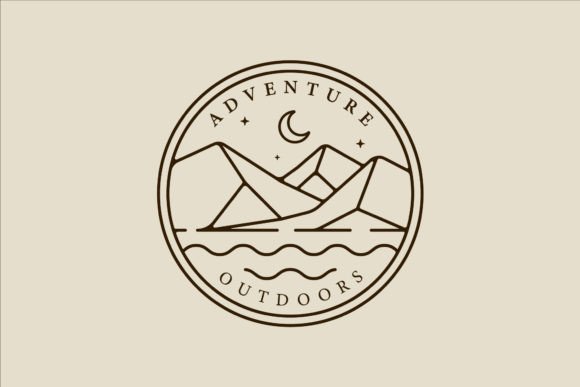
Simplicity is a virtue, but it can also be a trap if not executed correctly. A common misunderstanding is that a simple line art icon cannot convey depth or emotion. In reality, the best wild adventure nature outdoors sign uses negative space and clean strokes to suggest a moonlit night, a starry sky, or the rugged texture of a hill. However, if the lines are too thin or the contrast is too low, the design may disappear when printed on dark fabrics or light paper.
When evaluating a template, look at how the artist handles the water and the peak. Does the water look stagnant, or does the curve of the line suggest movement? Is the mountain silhouette strong enough to stand alone, or does it rely on background stars to look complete? A robust design works even when stripped down to a single color. This is vital for embroidery, laser cutting, or monochromatic branding where full-color gradients are not an option.
Furthermore, pay attention to the typography. Many templates include placeholder text like "Wilderness" or "Expedition." While convenient, this text is often generic. Before finalizing your design, ensure the font complements the linear aesthetic. If the text is too ornate, it clashes with the minimalist nature of the linear graphic design. If it is too plain, it fails to capture the spirit of the natural scenery. The balance between the icon and the text determines whether your logo feels like a cohesive badge or a mismatched collection of elements.
Practical Applications Beyond the Screen
Many entrepreneurs underestimate the versatility of a well-chosen vector illustration. A mountain and lake landscape logo is not just for websites; it is a powerful tool for physical branding. Because the design is isolated on a transparent background, it integrates seamlessly into various projects. Imagine the impact of cutting these designs out of high-quality vinyl and sticking them on the walls of a campsite, a tour bus, or a retail store. The sharp lines of the vector ensure the cut is clean and precise.
Similarly, when producing gifts like mugs, ornaments, or t-shirts, the resolution of your source file matters immensely. A 300 dpi PNG is perfect for digital screens, but for physical products, the vector source (EPS or AI) is required to prevent jagged edges. If you skip this step, your premium-looking logo might appear fuzzy on a customer's coffee mug, undermining the perceived value of your product.
Consider the context of your business. Are you targeting hikers looking for extreme challenges, or families seeking a relaxing holiday? The same landscape icon can be styled differently depending on the mood. For a serious expedition company, a stark, black-and-white line drawing conveys strength and reliability. For a vacation rental, adding subtle warm tones or soft curves to the water can evoke relaxation. The flexibility of the vector format allows you to tweak these elements without starting from scratch.
What to Check Before You Commit
Before downloading or purchasing a graphic design template, take a moment to review the technical specifications and usage rights. Ensure the file includes the necessary layers if you plan to customize the colors of the moon, the stars, or the river separately. This level of control is often overlooked but is crucial for creating a unique brand identity that stands out from competitors using the same free or stock assets.
Also, consider the software compatibility. While most modern tools handle SVGs well, older versions of design programs might struggle with newer vector features. If you are working with a team, confirm that everyone has access to the correct version of Adobe Illustrator or compatible software to open the EPS files. A file that one person cannot open is a wasted investment.
Finally, think about the long-term usability. A badge mountain, lake, landscape design should remain relevant for years. Avoid trendy styles that might look dated in two years. Instead, opt for classic geometric shapes and clean lines that represent the timeless beauty of the outdoors. By focusing on these practical aspects, you ensure that your logo serves as a lasting symbol of your brand's mission to explore and protect the natural world.
With the right approach, a mountain and lake landscape logo design becomes more than just an image; it becomes a statement of purpose. By avoiding common technical mistakes and understanding the true potential of vector art, you can create a visual identity that resonates with your audience and supports your business goals effectively.